How to Say “I Love You” in Cat Language

How do you say “I love you” in cat language?
Cats don’t “say” love with words—they show it through body language, tiny social rituals, and trust. If the goal is to tell a cat “I love you,” the most accurate translation is to use the signals cats use with each other: calm eyes, gentle proximity, respectful touch, and predictable kindness.
Use the slow blink (the closest thing to “I love you”)
Make soft eye contact, then slowly close your eyes for a second or two and reopen them. Many cats respond with their own slow blink or by relaxing their face and posture. It’s a low-pressure, friendly signal that says you’re safe and content.
Offer a calm “head bump” invitation
Cats exchange affection by rubbing cheeks and foreheads to share scent. You can mimic this by holding out a relaxed finger or knuckles at the cat’s nose level and letting them come to you. If they rub their cheek or forehead into your hand, that’s a mutual “love” moment—let them lead and keep it gentle.
Speak in “cat manners” with respectful touch
For many cats, the best affection is short, predictable petting in preferred areas: cheeks, under the chin, and the base of the ears. Avoid surprise hugs, belly rubs (unless your cat clearly enjoys them), or restraining holds. Ending the interaction before they get overstimulated can feel more loving than trying to “get one more pet in.”
Give love through choices, comfort, and routine
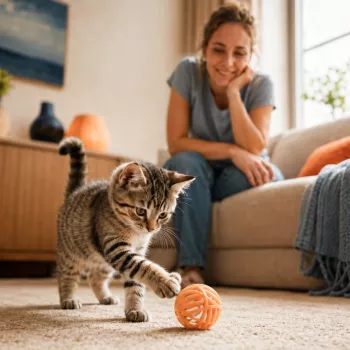
Cats interpret love as safety: consistent feeding times, clean litter boxes, cozy resting spots, and peaceful spaces to retreat. Add play sessions with a wand toy and let them “win” sometimes. A cat that chooses to stay near you, nap in your room, or follow you around is often saying “you’re my person.”
Learn your cat’s exact signals
Every cat has their own dialect—ear angles, tail position, posture, and vocal tone all matter. For a quick visual guide to common signals (including friendly versus “please stop”), see the printable cat body language cheat sheet and signal guide.
FAQ
Why does my cat purr when I pet them?
Purring often signals comfort and relaxation, especially when paired with loose posture, slow blinks, and gentle kneading. Some cats also purr to self-soothe, so check the full body language for context.








Leave a comment